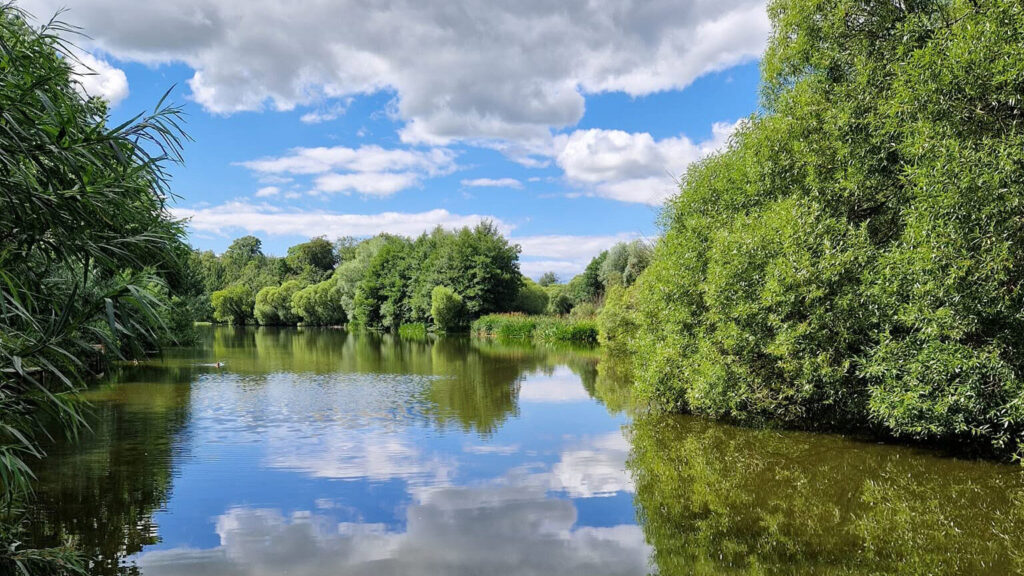
When Taylor Swift wrote “The Lakes” in the middle of lockdown, she wasn’t dreaming about a holiday. She was dreaming about disappearing.
The song’s most quoted lines are about being pursued by people with phones in their pockets. It’s a complaint about fame, but it’s also something every producer, director and location manager understands instinctively: the constant threat of being watched, filmed, leaked and commented on before you’ve even finished the take. Swift’s answer was to imagine herself somewhere those pressures couldn’t reach. She picked the Lake District.
She was writing from memory, in isolation, unable to actually get there — the Lakes as somewhere she could only reach in her head. For her it stayed a fantasy of escape. For a production shooting here, it’s simply Tuesday.
The privacy problem every shoot has
Anyone who has run a production near a major city knows the drill: managing onlookers, controlling who sees the talent, worrying about a phone camera in someone’s pocket ending up on social media before the scene is even in the edit. It’s a logistical cost that rarely makes it into the budget line but eats into every schedule anyway.
The Lake District solves this by simply not having the problem in the first place. There’s no paparazzi culture here, no crowds drawn by proximity to the industry, no constant foot traffic past your set. A studio in Cumbria gives a production the one thing that’s hardest to buy in London or Manchester: genuine, structural privacy. Not a locked door and an NDA, but distance itself doing the work.
That matters for anything sensitive before release: a talent-heavy shoot, an unannounced brand campaign, a project that needs to stay off social media until launch day. It’s the same instinct Swift was chasing in the song, just solved with geography instead of imagination.
The landscape was already doing the work
The other reason “The Lakes” resonates is that it isn’t really new. Swift was tapping into something the region has offered creative people for over two centuries. Wordsworth and Coleridge came here for the same reason she wrote about: to get some distance from the noise and let the work take over. The song reaches for this landscape precisely because of who came before her, and she wasn’t being flippant about it. She was placing herself in a lineage of people who came to Cumbria because it let them think clearly.
That’s not just a nice piece of literary trivia for a production. It’s the same fells, the same light, the same water that shaped one of the most successful albums of the last decade, sitting right outside the studio doors. You don’t have to dress a set to fake that atmosphere or spend a budget line building it. It’s already there, and it’s the kind of backdrop that reads as premium and unforced on camera in a way a studio cyc wall never quite manages.
Escape, but with better connectivity
Swift’s version of the Lake District was a place she could only visit in her head. Ours comes with power, connectivity, and a studio built for production. You get the isolation that protects a shoot and the landscape that elevates it, without giving up the practical infrastructure a modern production actually needs.
She wanted to go there in her head. We’d suggest actually booking it.